Marketing to Students Under 18 in India: What Google, Meta and the DPDP Act Allow
Google, Meta and the DPDP Act limit how you advertise to students under 18. What is allowed, what changes in May 2027, and a compliant setup.
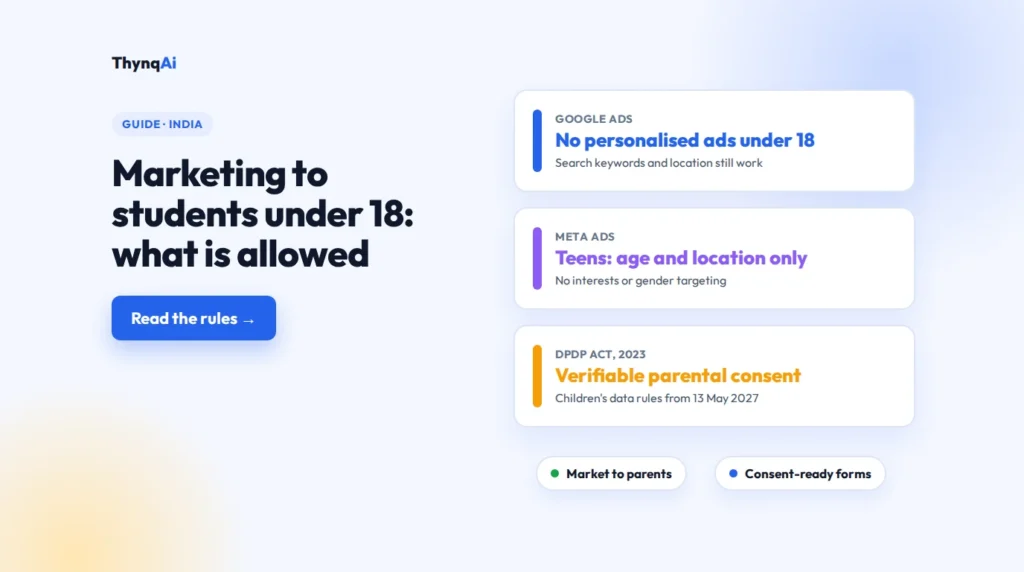
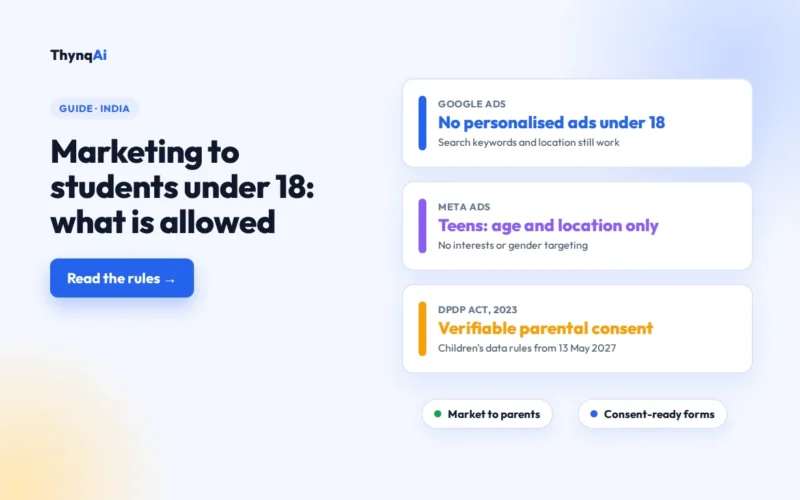
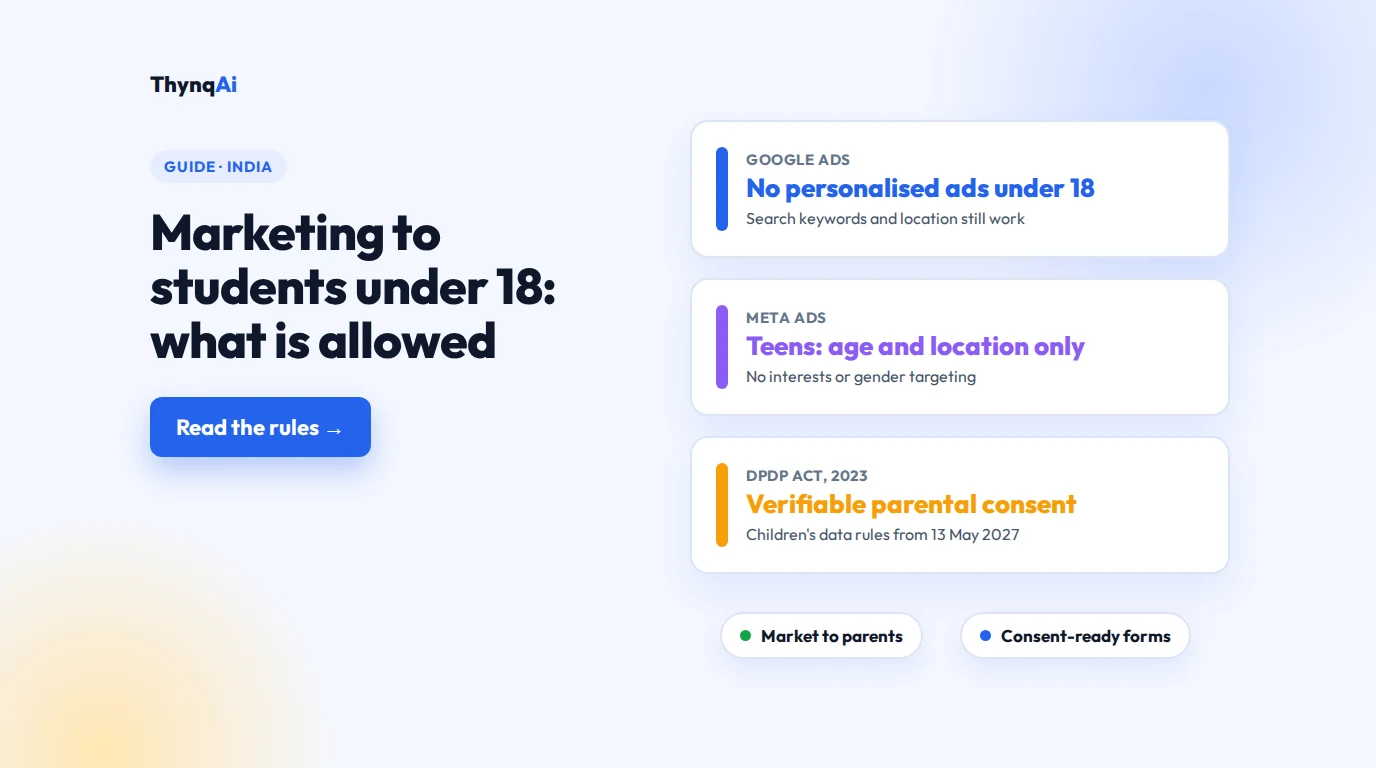
Short answer: You can still advertise a coaching institute or school to teenagers in India, but not the way you target adults. Google does not personalise ads for signed-in users under 18, Meta lets advertisers reach teens by age and location only, and the DPDP Act bars tracking, behavioural monitoring and targeted advertising directed at children once its rules for children’s data take effect on 13 May 2027. The workable approach: market to parents and adult learners, use contextual and local targeting for students, and treat a student’s data as the parent’s to give.
For most education businesses this is less of a loss than it sounds. The parent usually pays, and the parent is an adult you can reach normally. What changes is where the budget goes, how enquiry forms are built and which audiences you are allowed to upload.
What the platforms already restrict
Both big ad platforms have limited teen targeting for years. The DPDP Act adds a legal layer on top of their policies.
| What you cannot do with under-18s | What still works | |
|---|---|---|
| Google Ads | Personalised ads to signed-in users under 18; some sensitive categories are blocked for teens (Google’s ad-serving protections for teens) | Search ads on course and exam keywords, location targeting, contextual placements |
| Meta (Facebook, Instagram) | Targeting teens by gender, interests or in-app activity (changes Meta made in February 2023) | Ads shown to an age band in a location; full targeting for parents and adult learners |
| DPDP Act, 2023 | Tracking, behavioural monitoring or targeted advertising directed at children; processing a child’s data without verifiable parental consent (Section 9 of the DPDP Act, 2023) | Marketing to parents; first-party enquiries where a parent gives consent |
What the DPDP Act changes for schools and coaching
Under the Act a child is anyone who has not turned 18, which covers almost every school and coaching student. Before processing a child’s personal data you need verifiable consent from a parent or lawful guardian, and you may not track, behaviourally monitor or target advertising at children. The DPDP Rules were notified on 13 November 2025, and the obligations on consent and children’s data take effect on 13 May 2027.
In practice that touches three things most education marketers do today:
- Enquiry forms that ask a student for their name, phone and class, with no parent in the loop.
- Audience uploads of student phone numbers or emails into Google Customer Match or Meta custom audiences.
- Retargeting pixels on pages written for students, which follow them around the web afterwards.
None of this needs to stop on the day the rules arrive if you change the setup now. This article is a planning summary, not legal advice; check your own forms and contracts with a lawyer.
Market to the parent who pays
Parents search differently from students. A student looks for the course or the exam; a parent searches for fees, results, distance, batch timings and safety, and checks reviews before calling. Pages that answer the parent’s questions convert better and keep you clear of the under-18 rules, because the parent is the adult you are marketing to.
On Meta, that means ads aimed at parents in your catchment by age band and location, with creative that shows results, faculty and the campus. On Google, it means ads and landing pages built around fees, timings and “near me” searches, plus a complete Business Profile, since Google says local results depend on relevance, distance and prominence (Google Business Profile Help).
Adult learners are a different audience
Courses for college students, competitive exams taken after 18, and skill or professional programmes sell mostly to adults. For them the normal targeting tools apply. Split these campaigns from your school-age ones so the audience settings, forms and consent wording match who is actually enrolling.
A compliant setup, step by step
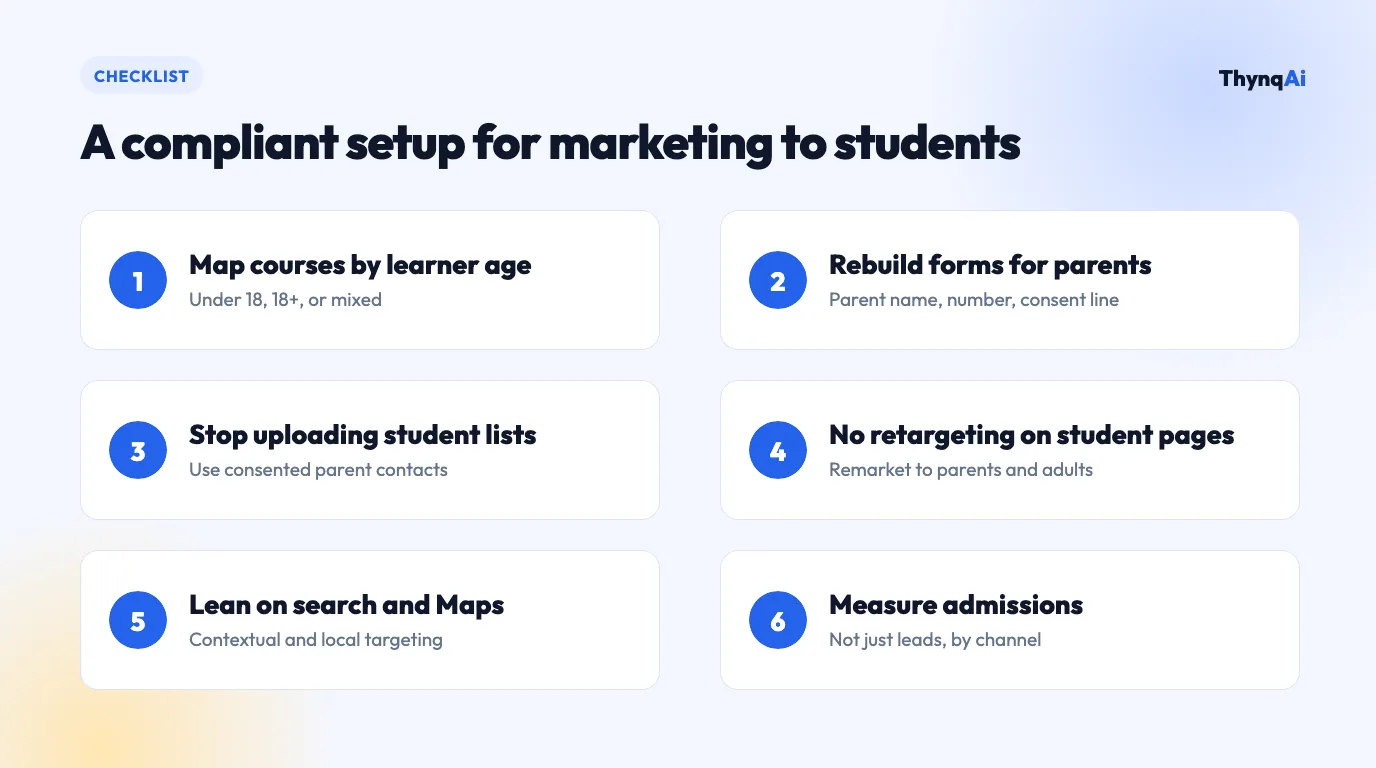
1. Map your courses by learner age. Under 18, 18 and over, or mixed. This decides who each campaign targets.
2. Rebuild enquiry forms for parents. Ask for the parent’s name and number, add a clear consent line, and record when consent was given.
3. Stop uploading student lists. Use parent contacts with consent for Customer Match and custom audiences.
4. Remove retargeting from student-facing pages. Keep remarketing for pages written for parents and adult learners.
5. Lean on search and Maps. Contextual and local targeting still reaches students and parents at the moment they look.
6. Measure admissions, not leads. Track which enquiries became counselling sessions and admissions, by channel.
What it means for your budget
Expect Google Search and your Business Profile to carry more of the load, because they reach intent without needing personal targeting. Meta still works, but the creative has to do the targeting: an ad that clearly speaks to parents of Class 10 students will find them better than any interest setting could. If you want the numbers side, our guide to Google Ads management cost and the Google Ads vs Meta Ads comparison cover where each rupee tends to work.
The short version
Teen targeting is already limited on Google and Meta, and the DPDP Act will make tracking and targeted ads aimed at under-18s unlawful from 13 May 2027. Education brands that market to parents and adult learners, collect parental consent on their forms and lean on search and Maps lose very little reach and stay on the right side of the rules.
Frequently asked questions
Can a coaching institute run Instagram ads to students?
Yes, but Meta lets advertisers reach users under 18 by age and location only, without interests or gender. Most institutes are better served aiming ads at parents and adult learners, and letting search and Maps catch students who are already looking.
Does the DPDP Act apply to coaching centres?
Yes. It applies to anyone processing digital personal data in India, including schools and coaching centres that collect student details online. For students under 18 it requires verifiable parental consent and bars targeted advertising directed at them.
When do the children’s data rules take effect?
The DPDP Rules were notified on 13 November 2025. The obligations on consent and processing children’s data take effect on 13 May 2027.
Can we still use Google Ads to reach students?
Yes, through search keywords, location and contextual placements. What Google does not do is personalise ads for signed-in users under 18.
Sources and method
Google: Ad-serving protections for teens and how local results are ranked. Meta teen targeting changes: Search Engine Land (January 2023). DPDP Act text: Section 9, processing of personal data of children. DPDP Rules timeline: AZB & Partners. This is a marketing summary, not legal advice.
Written 12 October 2026. Platform policies and the DPDP Rules are still evolving; we will update this page as they change.
We market schools, coaching institutes, preschools and academies. Education is our largest sector, with 8 businesses on our client list. See how we approach it on our education marketing page, or book a free admissions audit.