Why Your Ad Landing Pages Should Be Invisible to Google
Most teams build campaign landing pages and let Google index all of them. That quietly damages the pages you actually want ranking. Here is what to noindex, what to keep, and why.
Short answer: Usually not. Campaign pages built for one ad group, A/B test variants and near-duplicates should be noindexed: ads do not need the page indexed, and indexed copies compete with your real service pages. Use a noindex robots tag plus an X-Robots-Tag header, keep them out of the sitemap, and do not block them in robots.txt.
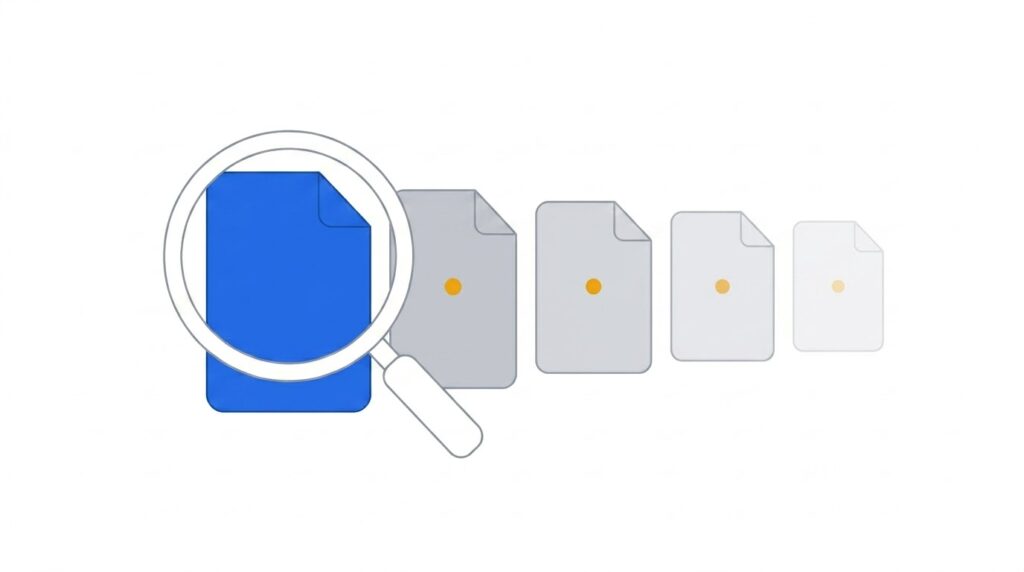
Here is a pattern we see constantly. A team runs paid search, builds a landing page per campaign, and over eighteen months accumulates forty of them. Each one is a near-copy of the last with a different headline. All forty are indexed.
Nobody decided this. It is just the default — publish a page in WordPress and it is indexable unless you say otherwise.
The cost shows up somewhere else entirely: the service page you actually want ranking starts slipping, and no one connects it to the landing pages.
Ads do not need the page indexed
This is the part that surprises people, so it is worth stating plainly: being in Google’s index has nothing to do with whether your ads work.
A paid click goes straight to the URL in your ad. Google Ads does not consult the organic index to serve it. Quality Score is assessed by crawling the landing page directly, and Google’s own documentation is explicit that a page blocked from indexing can still be crawled for ad quality purposes — the two systems are separate.
So indexing a campaign landing page buys you almost nothing, and costs you three things.
What it actually costs you
1. You compete with yourself
You have a service page you have invested in — proper content, internal links, whatever authority it has earned. Then you publish six landing pages targeting the same intent with thinner content and no links.
Google now has seven candidates for one query. It has to pick. Sometimes it picks a landing page: shorter, single-purpose, no navigation, written to convert rather than inform. A visitor arriving from an organic search lands on a page with no way to explore the rest of your site.
Worse, the signal splits. Any authority those pages accumulate is spread across seven URLs instead of concentrating on one.
2. Near-duplicate pages at scale look like a pattern
Google’s spam policies name scaled content abuse — producing many pages primarily to manipulate rankings rather than to help people. That policy was written with mass-generated content in mind, but the shape of forty near-identical landing pages is uncomfortably close to it.
You are unlikely to earn a manual action for a handful of campaign pages. But it is the wrong shape of thing to have in the index, and the upside for keeping them there is zero.
3. You spend crawl budget on pages that will never rank
Every URL Google crawls is one it did not spend elsewhere. On a large site with a lot of campaign pages, this is measurable. On a small one it is mostly a tidiness argument — but tidiness is worth something when you are trying to diagnose a ranking problem later.
What to noindex, and what to keep
The rule is about intent, not about the page being paid-traffic-only.
Noindex these:
- Campaign pages built for one ad group or audience
- Variants that exist for A/B testing
- Anything that is a near-copy of another page with the headline swapped
- Pages with no navigation, built solely to convert
- Anything you would be embarrassed to have someone arrive at from a search
Keep these indexed:
- A genuinely comprehensive page on a topic that happens to also receive paid traffic
- A tool, calculator or template with standalone value
- Original research, even if you promote it with ads
- A page you would build even if you stopped advertising tomorrow
That last one is the test worth remembering. If you would delete the page the day you paused the campaign, it should not be in the index.
How to do it properly
The robots meta tag
On the page itself:
<meta name="robots" content="noindex, nofollow">noindex keeps it out of results. nofollow on a landing page is reasonable too — there is usually nothing to pass authority to but your own thank-you page.
An HTTP header as well
Belt and braces, particularly if an SEO plugin is filtering your meta tags:
X-Robots-Tag: noindex, nofollowA page that must not be indexed should not depend on a single mechanism.
Keep it out of your sitemap
A sitemap is a list of pages you want crawled and indexed. Including a noindexed URL is a contradictory instruction. Most SEO plugins let you exclude a post type wholesale.
Do not block it in robots.txt
This is the common mistake, and it backfires. robots.txt prevents crawling — which means Google never reads your noindex tag. A URL blocked in robots.txt can still appear in results as a bare link with no description, because Google knows it exists from links pointing at it but has been forbidden from looking.
Allow crawling. Use noindex. They are opposite instructions and only one of them does what you want here.
Canonical tags are not a substitute
A canonical is a hint, not a directive, and it tells Google two pages are the same. If your landing page genuinely differs — different offer, different framing — the canonical may simply be ignored. Noindex is unambiguous.
The version that pays for itself
Once campaign pages are out of the index, a second decision opens up: they no longer need to look like the rest of your site.
An indexed page needs navigation, a footer, internal links — the things that make a site navigable and crawlable. A page receiving only paid traffic needs none of that, and every one of those links is an exit from a page you paid to put someone on.
What a campaign page needs instead:
- One action, repeated as the reader scrolls
- No navigation, no footer link farm
- The offer above the fold, in the words the ad used — message match is the largest single factor in whether a paid visitor stays
- Proof — a number, a named client, a specific result
- A form asking for as little as you can live with
- Its own thank-you URL, so each campaign can fire its own conversion
- The campaign name attached to the lead, so you can tell which ad produced which enquiry without a separate analytics exercise
That last point is where most attribution falls apart. If every campaign posts to the same form and the same thank-you page, you know your total lead count and nothing else.
A ten-minute audit
- In Search Console, run a site query or check the Pages report for indexed URLs. Look for campaign,
/lp/,/go/and offer-style paths. - For each, ask: would I keep this page if the campaign stopped?
- If no — add noindex, remove it from the sitemap, and confirm it is not blocked in robots.txt.
- Check whether any of them rank for a term your main service page targets. If so, that is a page actively working against you.
- Set a default for new campaign pages so this does not accumulate again.
That last step matters most. This problem is not caused by a bad decision — it is caused by nobody making one. Set the default to noindex and let anyone who genuinely wants a page indexed opt in deliberately.
Frequently asked questions
Should Google Ads landing pages be indexed?
Usually not. Campaign pages built for one ad group, A/B test variants and near-duplicates should be noindexed. The test: if you would delete the page the day the campaign stopped, it should not be in the index.
Does noindex affect my Google Ads or Quality Score?
No. A paid click goes straight to the URL in your ad, and Google can still crawl a noindexed page for ad quality purposes. The organic index and ad serving are separate systems.
Why is indexing campaign landing pages bad for SEO?
Your pages compete with each other for the same query, authority splits across near-copies, dozens of near-identical pages resemble scaled content abuse, and crawl effort goes to pages that will never rank.
Should I block landing pages in robots.txt instead?
No. robots.txt prevents crawling, so Google never reads your noindex tag, and the URL can still appear in results as a bare link. Allow crawling, use a noindex robots meta tag plus an X-Robots-Tag header, and keep the page out of your sitemap.
Is a canonical tag enough to keep a landing page out of Google?
No. A canonical is a hint rather than a directive, and Google may ignore it when the pages genuinely differ. Noindex is unambiguous.
Where to go next
Building new campaign pages or a full site? Here is what a website costs in India, and what every quote should include.
Keeping ad landing pages out of the index frees you to test them hard. Before you do, check how much traffic a test actually needs — most landing page tests never had the volume to detect the difference they reported. And whatever the test says, the number that decides whether to scale is your break-even ROAS, not the platform’s headline figure.
ThynqAi builds paid acquisition systems where the landing pages, the tracking and the attribution are designed together. If you are not sure what Google currently has indexed, we will take a look.